GTA 6 and the free-to-play attention economy
GTA 6's launch is the largest attention shock the games industry has ever scheduled in advance. Free-to-play games are structurally more exposed to it than any premium rival — and the ones that plan for the dip, rather than against it, come out ahead.

GTA 6 and the free-to-play attention economy
GTA 6 is out today, and for the next few weeks a meaningful share of the gaming world's evening hours will be spent driving through Leonida instead of grinding a battle pass. That is not a Rockstar problem or a player problem — it is a scheduled, industry-wide reallocation of attention, and free-to-play games have more to lose from it than any premium competitor ever did.
The thesis is simple: F2P games monetize attention on a daily basis, GTA 6 monetizes it once. When a 60-to-100-hour single-player campaign releases, the games that lose those hours first are the ones whose revenue tracks daily active players. The industry has known this since 2013. What has changed is how much of the industry now runs on that model.
The most exposed business model in games
Every free-to-play game is, functionally, an attention subscription. The player pays nothing to enter; the business works because enough players return daily, long enough, to buy a battle pass, a skin, or a seasonal bundle. Revenue follows engagement, and engagement follows calendar time.
A premium launch attacks exactly that input. The player working through GTA 6's campaign is not logging into Fortnite that evening, not doing Marvel Rivals dailies, not clearing the Warzone weekly. Nothing is wrong with those games; the hours simply moved.
The mechanics make it sharper than a generic "big game launched" week:
- Battle-pass timers do not pause. A player who skips twelve days mid-season usually does not finish the pass. Unfinished passes are the clearest leading indicator of a lapsed spender — the monetization damage outlasts the attention dip.
- Streaks and dailies break. Login streaks, ranked decay, event tracks — the retention machinery is designed to punish absence, and a great single-player game manufactures absence at scale.
- The cohort at risk is the valuable one. The players most likely to disappear into GTA 6 for three weeks are the engaged core — the daily logins, the pass buyers. Casual players drift less; they were drifting already.
Premium games do not have this exposure. A single-player studio loses nothing measurable when its players take three weeks off after finishing the game. The asymmetry is the story: the industry's biggest one-time purchase is landing on the business model that most depends on time.
What 2013 taught the industry
GTA V launched on September 17, 2013, made $1 billion in three days — still the fastest any entertainment product has hit that number — and pulled measurable playtime out of every major multiplayer title for roughly a month.
The interesting part is not the dip. It is the shape of the recovery, and who recovered fastest:
- Multiplayer titles that shipped their major content before launch week saw a clean, symmetric dip-and-return.
- Titles that scheduled major updates into the launch window watched those updates underperform — the content was fine; the audience was in Los Santos.
- The recovery began roughly when the campaign's completion curve flattened, about three to four weeks in, and it was faster than anyone expected. Players finished the story and came back.
That last point is the one the industry actually internalized. A single-player game, however enormous, is finite. Attention shocks from finite products are survivable and schedulable. The 2013 playbook became: do not fight the launch week, feed the recovery weeks.
The 2026 playbook
Thirteen years later, the same logic shows up across the current F2P calendar, and this week's schedule reads like a worked example:
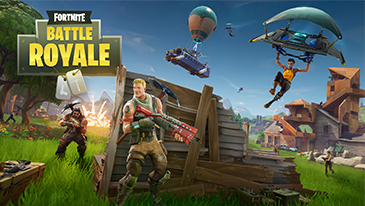
- Fortnite is mid-season in Chapter 7 Season 4. The season's heavy beats shipped weeks ago; the current window is filler by design.
- Marvel Rivals front-loaded Season 4, Heart of the Dragon in September and landed its mid-season patch before November — leaving a deliberately quiet runway.
- Warzone's Season 5, Drone Labs content is past its peak push, same pattern.
- Counter-Strike made the opposite bet and leaned in: the Shanghai Major runs Nov 11-22, on the theory that esports appointment viewing — a scheduled appointment with other people — holds up against a solo campaign better than daily grind tracks do.
Two other moves round out the standard playbook. Publishers quietly move patch dates — a balance patch that would have shipped this week ships next week, and nobody announces why. And the smarter operators hold a retention event in reserve: something aimed at the recovery window, three to four weeks out, when GTA 6's completion curve flattens and daily attention comes back up for grabs.
None of this is panic. It is calendar hygiene. The F2P operators that treat launch weeks like weather — something you forecast and dress for — have known the forecast for this date since May 2025.
The counter-argument: attention is not spend
There is a real case that the fear is overblown, and it deserves a fair hearing.
GTA 6 is a one-time purchase. It does not compete for the F2P player's wallet in any direct sense — someone who spent on GTA 6 this week has not stopped being a Fortnite or Rivals spender; they have stopped playing Fortnite or Rivals this week. Attention moves; spend mostly waits.
The campaign is also finite, and finite is the operative word. Players finish. The 2013 recovery took three to four weeks and was driven by exactly the cohort that had left — the engaged core, back from finishing the story. There is even an argument that a strong single-player launch acts as a market-wide engagement refresher: millions of lapsed console players turn their machines back on, and some fraction of them remember the F2P games waiting for them.
And attention shocks cut both ways at the margin. GTA 6 will be many players' first current-generation console event; the holiday season that follows it is the highest-intent buying window of the year. F2P games with holiday events lined up are, in effect, positioned to catch players at the moment they are most primed to spend.
The honest read: the dip is real, structural, and temporary. The danger is not losing players to GTA 6 — it is the battle-pass machinery converting a temporary absence into a permanent one.
What to watch in the next 90 days
The numbers that matter, in order:
- 30-day concurrent curves for Fortnite, Marvel Rivals, and Warzone. Not the depth of the dip — the slope of the return.
- Battle-pass completion rates this season versus last. This is the monetization signal under the engagement signal.
- GTA 6's own online reveal. When Rockstar details a GTA 6 online mode, the question stops being a launch-week curiosity and becomes a standing competitive one: a live-service GTA is the single most credible threat to every open-ended F2P game on the market.
- The recovery-window events. Which F2P games ship something aimed at the three-to-four-week mark, and whether it lands.
For our part, we track the F2P side of this question continuously — the state of the model in State of F2P 2026, the field of upcoming titles in the most anticipated F2P games of 2027, and the practical answer for anyone whose evening hours just opened back up in the best F2P games of 2026.
The verdict
GTA 6 is the largest scheduled attention shock the games industry has ever seen, and free-to-play is the most exposed business model on the board. But exposure is not damage. The 2013 precedent says the dip is a month, not a migration; the 2026 calendar says the industry learned the lesson and planned around the date; and the economics say a one-time purchase never needed the player's wallet — only their evenings, and only for a while.
The F2P games that treat this week as weather will be fine. The ones that panic-patch into the window, or let their pass timers convert absence into churn, will spend Q1 paying for it.
Sources: Rockstar Newswire (delay and launch announcements), historical GTA V sales and coverage, publisher patch calendars.