League of Legends review: the biggest MOBA in the world, finally free, still the best in 2026
League of Legends in 2026 is the most polished version of itself yet. 200+ champions, a stable ranked system, and the deepest esports scene in the genre. Still the best 5v5 MOBA you can play.
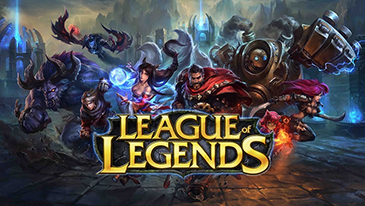
League of Legends review
Fifteen years after release, League of Legends is still the most-played 5v5 MOBA on PC. The 2026 version is the most polished yet: 200+ champions with distinct mechanics, a stable ranked system, and the deepest esports scene in the genre.
Across hundreds of hours on Summoner's Rift, what keeps League of Legends relevant is how cleanly spatial control, wave management, and objective timers compound over a 30-minute match. Every dragon spawn, Voidgrub cluster, and Baron setup forces clear trade-offs between side-lane pressure and five-player teamfighting.
| Dimension | 2026 Assessment | Key Detail |
|---|---|---|
| Core Gameplay | Exceptional | 5v5 lane-to-objective macro remains genre benchmark |
| Monetization | Fair | Skins, passes, and chromas only; champions earnable free |
| Learning Curve | Steep | Large roster, item interactions, and wave rules take time |
| Ranked Structure | Active | Three ranked splits yearly with visible LP feedback |
| Esports Scene | Premier | LCK, LPL, LEC, LCS, MSI, and Worlds lead viewership |
Riot's seasonal cadence now reshapes jungle tempo, neutral objectives, and rune tuning three times a year rather than leaving one stale meta for twelve months. While that pace creates occasional balance spikes on patch day—especially when newly released kits arrive overtuned—biweekly balance hotfixes usually bring win rates back within predictable ranges before pro playoffs begin.
Performance on PC remains a major strength. Even older laptops comfortably hold high frame rates during five-versus-five teamfights, and Riot Vanguard anti-cheat runs quietly for competitive queues despite lingering player debate over kernel-level permissions. New accounts still face dozens of hours learning matchups before Ranked unlocks, yet co-op vs. AI, ARAM, and Swiftplay make practicing mechanics far less punishing than early seasons.
The gameplay
The core gameplay loop is the same as it was in 2009: 5v5, three lanes, jungle, and a base to defend. What's changed is the depth. Each of the 200+ champions has 4-5 unique abilities, a passive, and a defined role. Mastering a single champion takes 50+ games. Mastering a role takes 200+ games. Mastering the game is a multi-year journey.
The 2026 patch cycle keeps the meta fresh. New champions drop every 6-8 weeks, and balance patches every 2 weeks. The patch cadence is fast enough that the meta shifts meaningfully every month.
The ranked system
The ranked system in 2026 is the most stable it's been. The medal ladder (Iron, Bronze, Silver, Gold, Platinum, Emerald, Diamond, Master, Grandmaster, Challenger) is straightforward. The placement system is honest: 10 placement games set your initial rank, and the rest is pure skill.
The 2026 changes:
- Emerald tier sits between Platinum and Diamond, splitting the previously crowded mid-tier.
- Master and Grandmaster are now hard tiers — you can demote out of them, not just decay.
- Challenger is the top 300 players per region. The cutoff is brutal.
If you want to climb, the path is straightforward: pick 2-3 champions in your main role, learn the matchups, and grind.
The free-to-play model
LoL is one of the most generous F2P models in the genre:
- All 200+ champions are unlockable through play. You earn ~6,000 BE (Blue Essence) per week from games and dailies.
- No pay-to-win mechanics. Buying champions with RP (Riot Points) just saves you grinding time.
- Skins are the only meaningful monetization. Cosmetic only.
The catch: new champions drop at 4,800 BE, which is more than a week's grind. New players need to pick a few champions to focus on, not try to unlock everything.
The esports scene
LoL esports is the most-watched F2P esport globally. The 2026 season:
- LCK (Korea), LPL (China), LEC (Europe), LCS (NA) are the four major regions.
- Worlds 2026 is the marquee event. 24 teams compete for the Summoner's Cup.
- MSI (Mid-Season Invitational) is the regional-vs-regional event in May.
The viewership is unmatched. The 2025 Worlds final had 6.9 million peak concurrent viewers — more than the Super Bowl. The 2026 final is expected to cross 7 million.
What's not great
The community is a real issue. Solo queue toxicity is well-documented:
- Flame in chat is common, especially after a losing streak.
- AFK players are a frequent issue, especially in low-priority queues.
- Smurf accounts (high-level players on new accounts) ruin low-rank games.
Riot has improved the systems (muting, reporting, low-priority queue) but the underlying issue — competitive games attract competitive people — won't go away.
Progression, cosmetics, and competitive integrity
Every playable champion can be unlocked with Blue Essence earned through leveling capsules and seasonal milestones, or instantly sampled via the weekly free rotation. Xbox Game Pass subscribers can link accounts to unlock the full champion pool while active, though standard free players typically gather enough currency for a focused three-champion ranked pool within their first couple of weeks. Real money strictly buys skins, Mythic variants, event passes, and ward or emote cosmetics—none confer bonus stats, gold income, or faster cooldowns.
Ranked progression divides the year into three competitive splits with softer resets between seasons, letting committed solo-queue players climb through Iron up to Challenger without wiping MMR twice a year. Solo and Duo queue enforces strict two-tier grouping caps near Apex ranks so high-MMR lobbies preserve competitive integrity. Voice communication remains restricted to premade parties, which cuts verbal abuse relative to open-mic shooters while placing greater emphasis on smart pings and minimap awareness.
Who should play League of Legends
League of Legends suits players who enjoy methodical planning, tracking summoner spell timers, and coordinating five-player macro decisions over thirty-minute matches. If you want pure twitch gunplay or fifteen-minute drop-in matches without item shop complexity, Wild Rift on mobile or Brawl-style ARAM queues will fit better than ranked Summoner's Rift.
The verdict
LoL is the genre-defining 5v5 MOBA. 15 years in, it's still the gold standard. The free-to-play model is generous, the esports scene is unmatched, and the gameplay depth is incomparable.
If you've never played LoL, 2026 is a good time to start. The new player experience is the most polished yet, and the community is more welcoming than it was in 2014.
Score: 9/10. The genre-defining MOBA, finally free, and still the gold standard for 5v5 competitive play.
Frequently asked questions
Is League of Legends completely free to play?
How many champions does League of Legends have?
Does League of Legends have any pay-to-win items?
How long does an average League of Legends match take?
Is League of Legends hard for beginners in 2026?
Sources
3The claims in this article are backed by the following sources. Click through to verify.
- [1]League of Legends Official Site (Riot Games)leagueoflegends.com
- [2]League of Legends Patch Notes Archiveleagueoflegends.com
- [3]LoL Esports Official Schedule & Standingslolesports.com
Pros
- ✓ 200+ champions, each with distinct mechanics and a learning curve
- ✓ Best esports scene in the genre — Worlds is the most-watched F2P event globally
- ✓ Constant updates — new champion every 6-8 weeks, balance patches every 2 weeks
- ✓ Free to play all 200+ champions with enough playtime
Cons
- ✗ New champion releases are power-crept — expect 1-2 weeks of frustration
- ✗ Toxic community is a real issue, especially in solo queue
- ✗ Long matchmaking times at off-hours