Dota 2 at 13: how Valve's MOBA outlasted its rivals
A decade after its release, Dota 2 stands alone as the last uncompromised MOBA — no monetisation gimmicks, no surrender, no plan B.
The game that refused to change
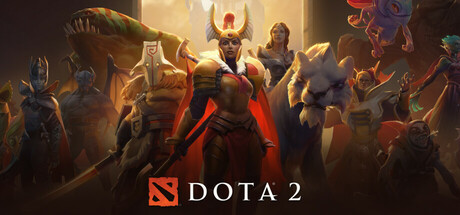
Dota 2 was released in July 2013, a year after League of Legends had already become a global phenomenon and three years before the MOBA boom would peak with over a dozen competitors. It launched as a direct competitor to a game that had already won. And it launched as a Valve game, which meant it followed Valve's rules: no hero unlocks, no monetisation of gameplay, no surrender.
Thirteen years later, almost every competitor is gone. Heroes of the Storm is in maintenance mode. Smite is on its second version and struggling. The various Dota-derived mobile games have come and gone. Only League of Legends and Dota 2 remain. And Dota 2 survived by refusing to bend.
The free-to-play that meant it
When Dota 2 launched, its monetisation was controversial. The entire hero roster was free. All gameplay content was free. Valve sold cosmetics, announcer packs, and terrain skins — items that changed how the game looked without affecting how it played. The industry assumed this was unsustainable. How could a game survive without selling power?
The answer turned out to be: by having the best game. Dota 2's all-heroes-free model created a player base that stayed because they wanted to, not because they had invested money in a champion unlock. It eliminated the pay-to-win accusations that dogged every other F2P title. And it forced Valve to compete on quality alone.
The complexity ceiling
Dota 2 is the most complex competitive game ever made. Over 120 heroes, each with four unique abilities. Items that act as ability modifiers. Couriers, creep aggro, deny mechanics, day/night cycles, neutral camps, runes, illusions, and mechanics like Armlet toggling that require frame-perfect execution. New players face a learning curve that is not a curve — it is a wall.
Valve never tried to flatten that wall. Where League of Legends streamlined summoner spells, removed deny mechanics, and simplified item builds, Dota 2 held its ground. The result is a game that loses casual players but builds ferocious loyalty among the ones who stay. The average Dota 2 player has over 2,000 hours. The retention curve does not decline — it plateaus.
The International
The International is the annual world championship that began as a $1.6 million tournament in 2011 and ballooned to a $40 million prize pool at its peak. The Battle Pass system — seasonal compendiums that fund the prize pool through cosmetic sales — was the most successful crowdfunding model in entertainment history.
When Valve retired the Battle Pass system in 2023, The International's prize pool dropped. But the tournament itself remained. The International 2025 drew over a million concurrent viewers for the grand finals. The event has become bigger than the prize money. It is a pilgrimage — a gathering of a community that exists partly because Dota 2 demands so much of them.
The modern era
The current Dota 2 landscape is healthier than it has been in years. The 7.39 patch reworked the safelane and neutral item system. The Eastern European scene is producing new talent faster than ever. Valve has started communicating more — patch notes with design reasoning, developer AMAs, and a roadmap that extends through the end of 2026.
What Dota 2 proved
Dota 2's survival is a counterargument to every design compromise justified by "market realities." It proved that a game can be free without being F2P. It proved that complexity is not a barrier to mainstream success — it is a filter that creates a dedicated audience. It proved that a company can stand on the sidelines of the trends (no battle royale mode, no mobile port, no PvE spin-off) and still command the genre.
Dota 2 is not the most popular MOBA. It does not need to be. It is the game that its players respect most.
About 3 minutes read.