The economics of free-to-play games — how F2P games actually make money in 2026
Free-to-play games in 2026 are a $100+ billion industry. But how do they actually make money? The five business models that dominate F2P gaming, the whales that fund 90% of revenue, and the future of the genre.
The economics of free-to-play games
Free-to-play games in 2026 are a $100+ billion industry globally. Fortnite alone generated $20 billion in revenue between 2018 and 2025. League of Legends, Dota 2, Genshin Impact, and Valorant each generate billions per year. But how do F2P games actually make money when the games themselves are free?
The answer is more interesting than "microtransactions." F2P gaming has evolved into a sophisticated industry with at least five distinct business models, each with its own economics, its own player base, and its own long-term sustainability.
The five business models
1. The cosmetic model (Fortnite, LoL, Dota 2)
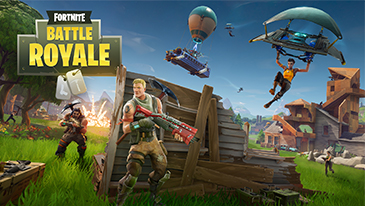
The oldest F2P model. The game is free, the gameplay is free, and the monetization is purely cosmetic — skins, emotes, voice lines, banners. The player power is identical for paying and non-paying players.
Revenue mechanics: the cosmetic model relies on impulse purchases and FOMO. A new skin drops, the player sees it in the shop, and they buy it. The skin is gone in 24-48 hours, and the next skin drops.
The economics: cosmetics have 100% margin (no manufacturing, no distribution, no support cost). The challenge is volume — the game needs millions of players for the cosmetic model to work.
Examples: Fortnite ($20B lifetime), LoL ($10B+ lifetime), Dota 2 ($2B+ lifetime), Rocket League ($1B+ lifetime).
2. The gacha model (Genshin Impact, Honkai Star Rail, Wuthering Waves)
The gacha model is the most controversial F2P model. The game is free, the gameplay is free, and the monetization is character/weapon pulls from a randomized loot box. The player pays for a chance at the character, not the character itself.
Revenue mechanics: the gacha model relies on pity systems (guaranteed 5-star after 50-90 pulls) and time-limited banners. The pity system keeps players engaged, the time-limited banners create urgency.
The economics: gacha games have the highest revenue per player of any F2P model. A whale (player spending $1000+ per month) can fund 100+ free players. The challenge is regulatory — China, Japan, and the EU have all implemented gacha disclosure rules.
Examples: Genshin Impact ($5B+ lifetime), Honkai Star Rail ($2B+ lifetime), Wuthering Waves ($500M+ lifetime).
3. The battle pass model (Apex, Overwatch 2, Fortnite STW)
The battle pass is the middle ground between cosmetics and gacha. The game is free, the gameplay is free, and the monetization is a season pass ($10-20 per season) that gives you 100+ cosmetic items.
Revenue mechanics: the battle pass is a guaranteed revenue stream. Every player who buys the pass pays the same amount and gets a fixed reward. No randomness, no FOMO (well, less FOMO than gacha).
The economics: the battle pass is sustainable but lower-revenue than gacha. A typical Apex player spends $30-100 per year on the pass. The challenge is keeping the pass rewarding enough to drive sales.
Examples: Apex Legends ($2B+ lifetime from passes), Overwatch 2 ($1B+ lifetime from passes), Fortnite Save the World ($500M+ lifetime from passes).
4. The subscription model (FFXIV, WoW, ESO)
The subscription model is the oldest monetization model in MMOs. The game is free-to-play (with restrictions), but the full game requires a monthly subscription ($10-15 per month).
Revenue mechanics: the subscription is a guaranteed recurring revenue stream. The player pays every month, and the content is delivered over time. The model is similar to Netflix or Spotify.
The economics: the subscription model is the most stable of any F2P model. The challenge is keeping the content pipeline consistent — players churn if the content updates slow down.
Examples: FFXIV (10M+ subscribers at peak), WoW (5M+ subscribers at peak), ESO (3M+ subscribers at peak).
5. The advertising model (Roblox, Fortnite Creator, Core games)
The advertising model is the newest F2P model. The game is free, the gameplay is free, and the monetization is advertising (in-game ads, branded content, creator revenue sharing).
Revenue mechanics: the advertising model relies on volume. The game needs billions of impressions per month to be profitable. The model is common in mobile games and Roblox-style platforms.
The economics: the advertising model has the lowest revenue per player but the highest scale. Roblox paid out $800M+ to creators in 2024. The challenge is keeping the ads non-intrusive.
Examples: Roblox ($3B+ lifetime), Fortnite Creator ($200M+ lifetime), various mobile games.
The whales
The dirty secret of F2P gaming is that whales — players spending $1000+ per month — fund most of the revenue. The 80/20 rule is more like 95/5 in F2P:
- 5% of players spend money in most F2P games.
- 1% of players are whales, spending $1000+ per month.
- 50% of revenue comes from the top 1% of spenders.
The whale economy is sustainable for two reasons:
- The whales are a tiny fraction of the player base. Whales don't impact the gameplay for free players.
- The whales' spending is voluntary. Most whales can afford the spending and see it as a hobby.
The ethical question is whether the whale model is exploitative. The answer depends on the game:
- Cosmetics and battle passes are voluntary. The whales get cosmetic bragging rights, the free players get the same gameplay.
- Gacha is borderline. The pity system is designed to keep players engaged, but the randomized pulls can be addictive.
- Pay-to-win is exploitative. The whales get gameplay advantages that the free players can't match.
The future
The F2P industry in 2026 is mature, but there are still open questions:
- AI-driven content — can AI generate enough content to keep up with the demand for new content?
- Cloud-native games — can cloud-native F2P games (games that run in the browser) compete with native F2P games?
- Cross-platform persistent worlds — can a single F2P game span PC, console, and mobile?
The next 5 years will likely see:
- More consolidation — the top 20-30 F2P games will capture 80%+ of the revenue.
- More regulation — the EU and US are likely to implement gacha disclosure rules.
- More cross-platform play — cross-platform F2P games will become the default.
The F2P industry is here to stay. The games that survive will be the games that respect player time and build strong communities. The games that don't will be replaced by the next generation of F2P games.
The takeaway
F2P gaming is a $100+ billion industry with five distinct business models. The cosmetic model is the most sustainable, the gacha model is the most controversial, and the subscription model is the most stable. The whales fund 50% of the revenue, but the free players drive the player base.
For players, the message is simple: the top F2P games in 2026 offer more value than the top paid games. Spend your time in the games that respect you, and ignore the ones that don't.
See our F2P games tier list for our picks, or the free-to-play directory for every game we cover.
About 6 minutes read.